The black-on-black Rothko
As a new season of mourning begins, remembering an encounter with art that helped me understand the unspeakable intricacies of grief.

The first time a piece of art stopped me in my tracks, I had just turned 20.
It was 2003, and in the wake of Sept. 11, I was a college student familiarizing myself with the intricacies of uncertainty, sadness and confusion.
In America, I wasn’t legally allowed to drink, but I was old enough to know that people my age were losing their lives in a war I didn’t understand and couldn’t do anything about it.
Art was newly on my radar as something that (apparently) people used to protest and to provoke. They preached and prayed with art, and piddled away the afternoon with it.
But art scared me. I didn’t speak the language.
Paintings — and the whole art world — were even harder than the Spanish I was trying to keep up with in my classes.
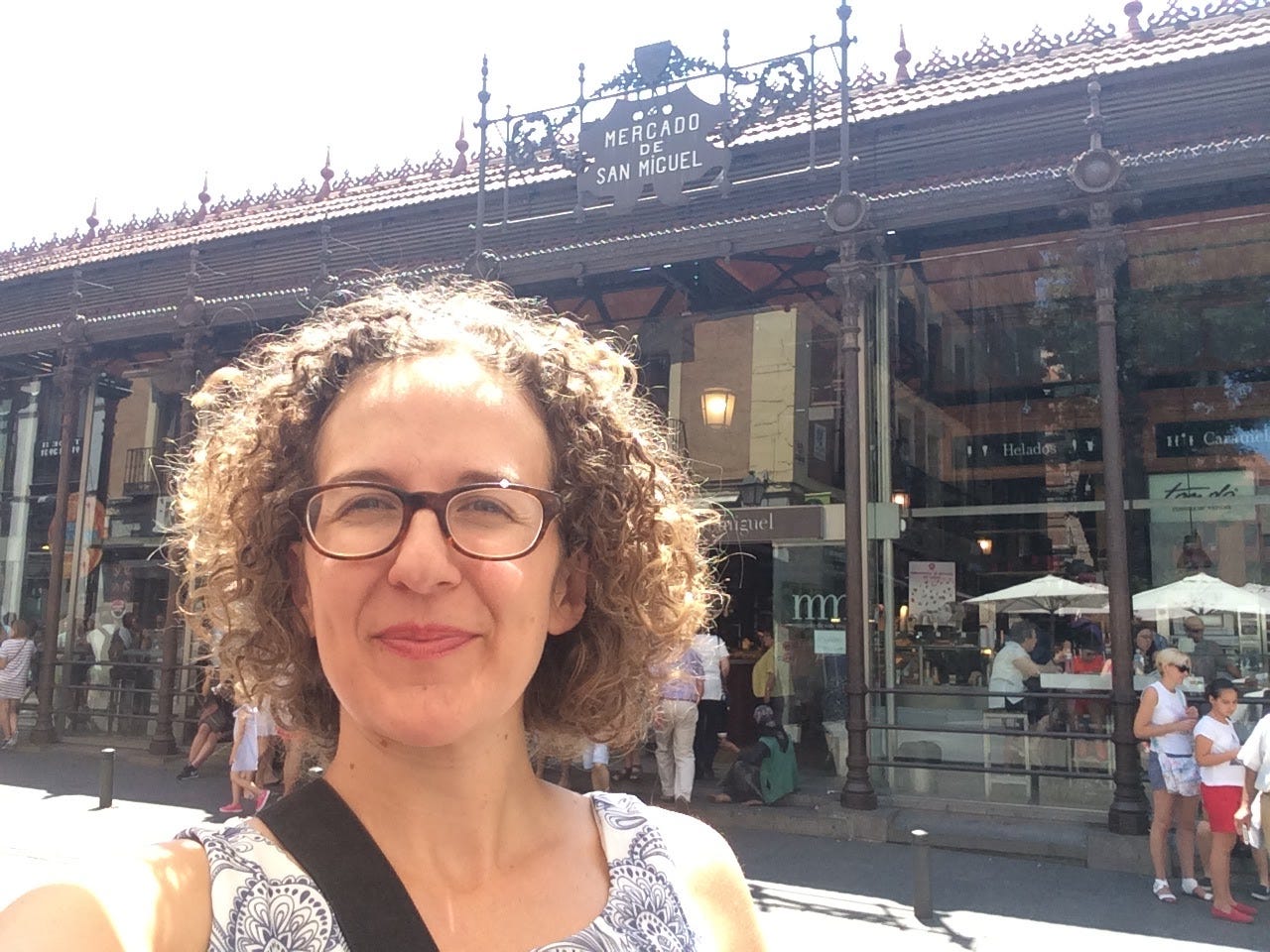
But I knew the best way to learn was immersion, so I signed up for a year-long study abroad program in Spain, where I planned to claim that I was Canadian if anyone asked, and I started going to museums everywhere I traveled.
Paris, Barcelona, Bilbao.
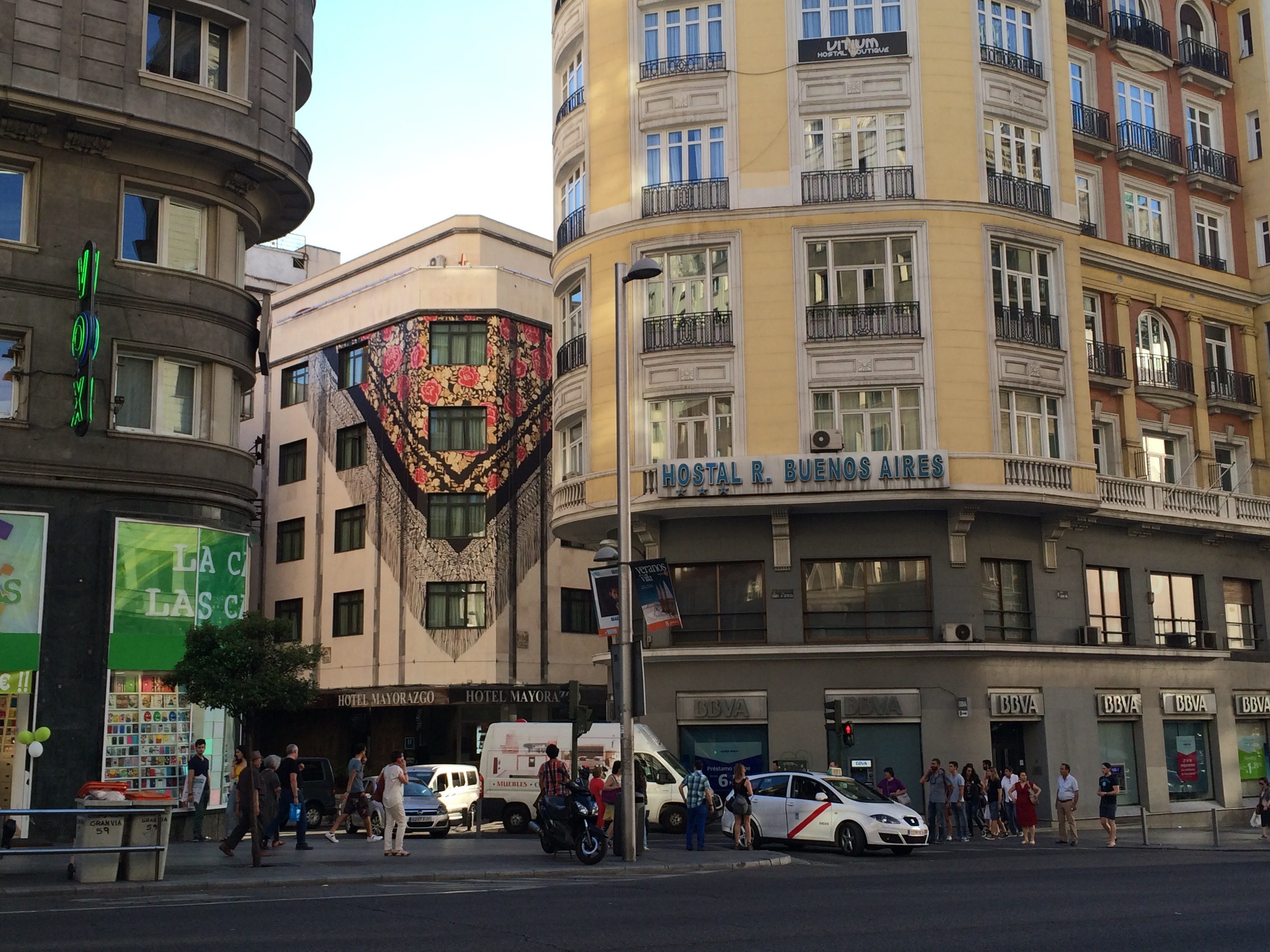
I read every placard, trying to memorize names so I could at least pretend I wasn’t from a small town that was literally and figuratively a long way from the centers of the art world.
I learned about “the mobile guy” (Alexander Calder) and “the woman with the scrolling texts” (Jenny Holzer). I could pick out Jackson Pollock’s splatters and Georgia O’Keeffe’s flowers.
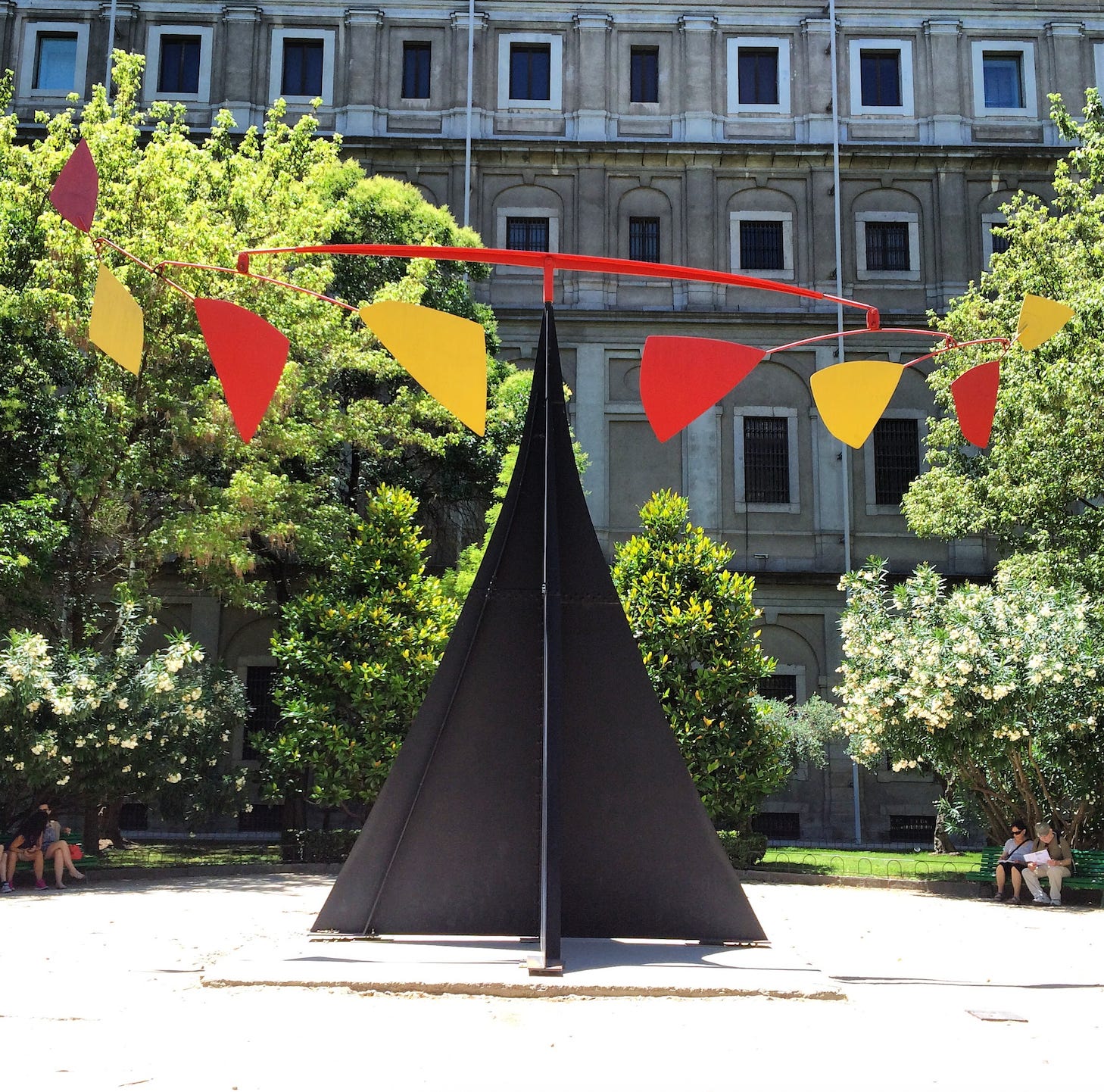
Matching the art with the artists became almost a game. Like birdwatching. Or Guess Who?
Until that day in Madrid.
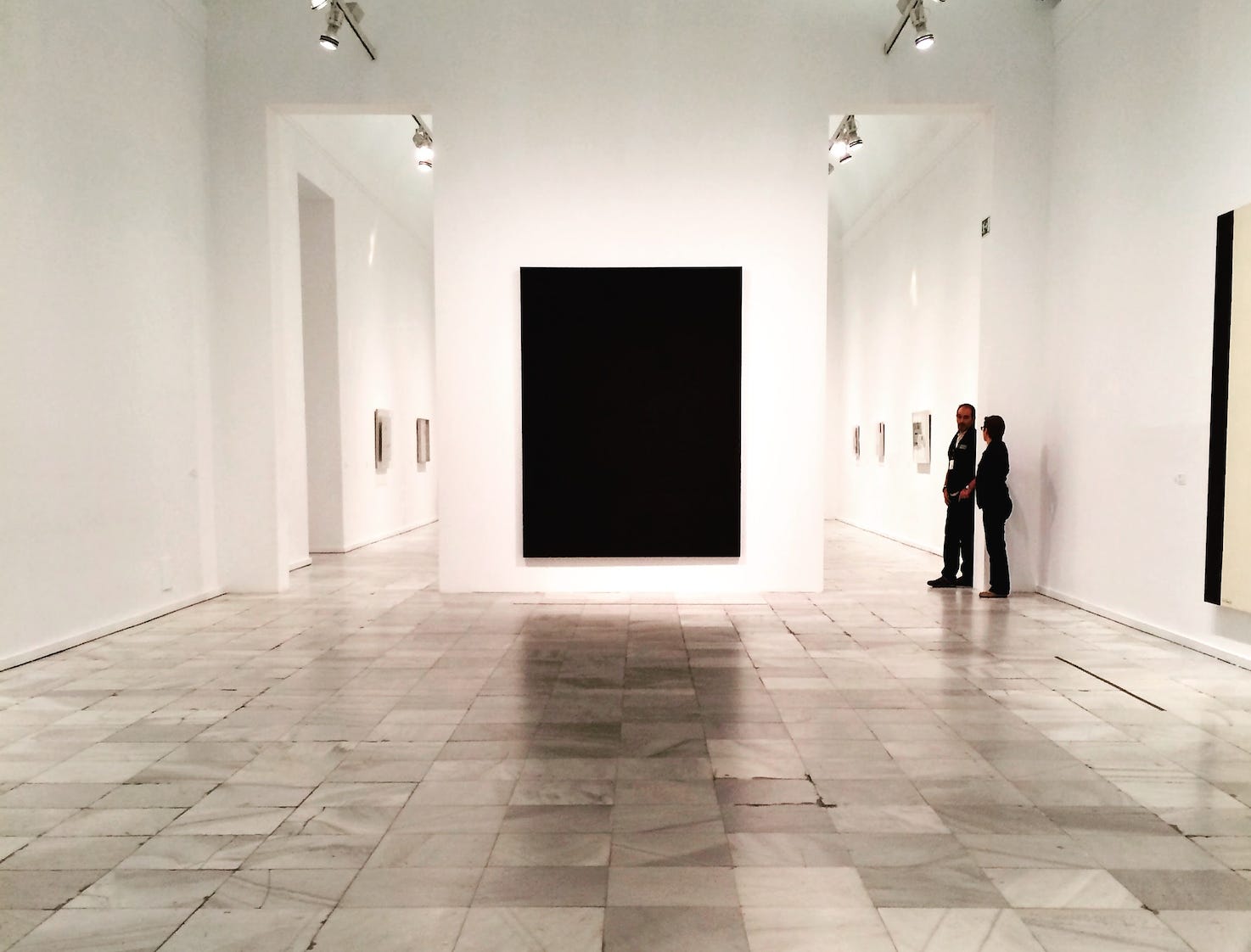
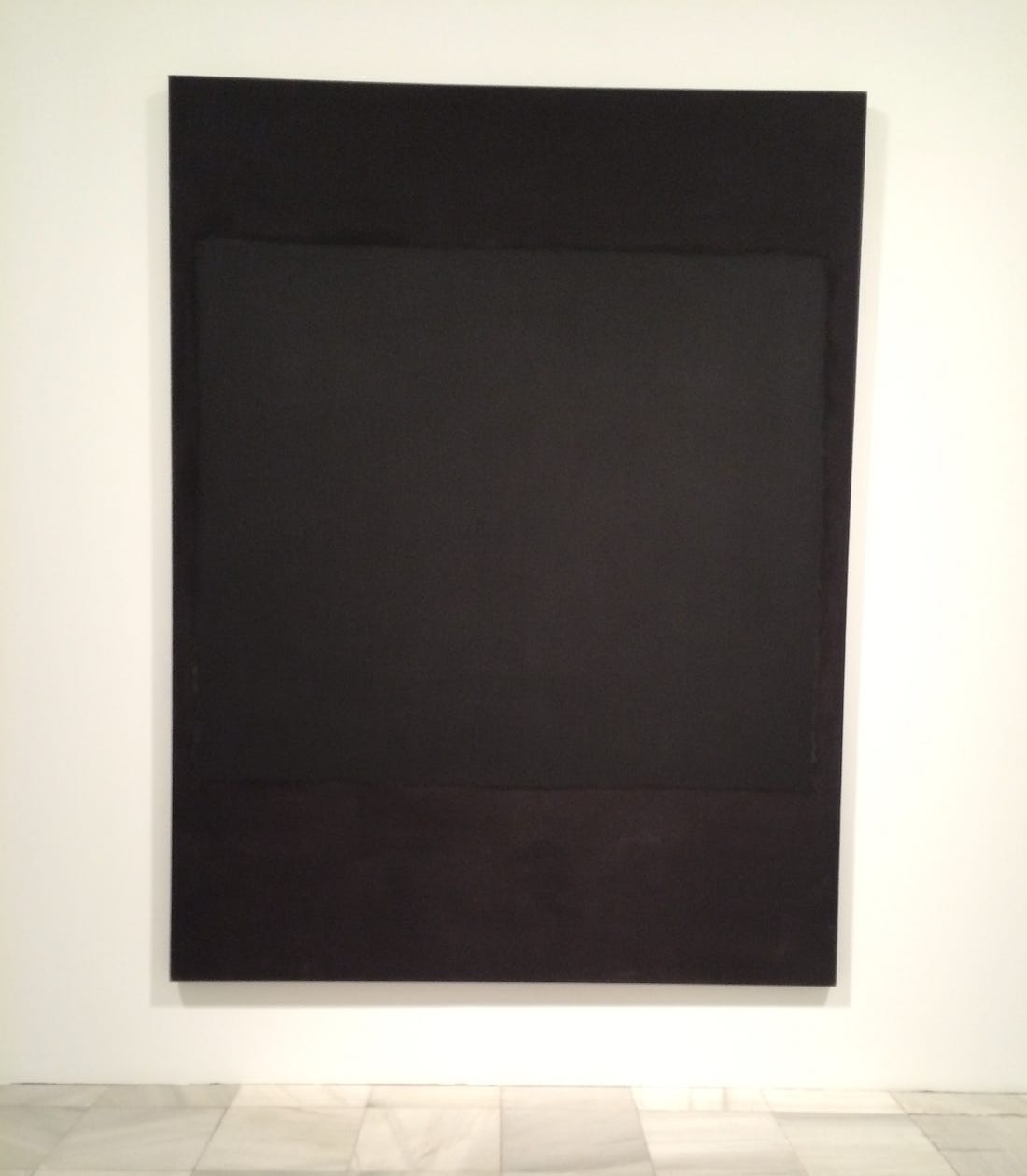
I turned that corner in an impeccably white gallery in the Museo Reina Sofía, and a huge black-on-black painting sucked me in immediately.
I’d seen Mark Rothko’s paintings before, but this one found a way to a tender spot I didn’t know I had.
I don’t have the exact name of the piece, but I think it is from the Black Form series he did in 1964, just a few years before his own death by suicide.
I didn’t know those details at the time, but the simplicity, the palette, the subtle difference between the box and the canvas on which it was painted pulled me into a void that wasn’t empty but full.
My heart sped up. I swallowed and sipped what air my lungs could manage. Tears blurred the scene. I was feeling feelings that were both familiar and new.
Why was I crying because of this almost overly simple piece of art? Why couldn’t I stop looking at the line between these two shades of black? How could I even see two shades of black? The feelings shape-shifted from disgust and maybe even fear to intense recognition.
This painting said something that my own words could not.
All these years later, I still don’t think I have them.
But I thought I would try.
That day in Madrid was the first of what I now call “Rothko moments,” when art works its magic and opens a portal into a new place where truth and understanding aren’t necessarily on the same side of the street.
I find myself in one of those spots right now.
In the past month, we’ve had two deaths in my extended family in Washington DC, including the loss of a young cousin, who died unexpectedly last week.
It’s a gone-too-soon death that rattles my soul.
A grief that shows me a new side of itself.
A new shade of black.
This year marks 20 years since my dearest college friend, Troy, died in a tragic accident when we were 23, just a few years after I’d seen that painting and started opening myself to these encounters with art that took me to places within myself that I hadn’t known yet.
Art stopped being something I saw but something I experienced.
What I didn’t realize was how much these moments would come to comfort me in times when I faced inexplicable loss.
Like now.
I can close my eyes and think about what I felt all those years ago, when I was still adjusting to the fact that life wasn’t limited to 64 colors in the crayon box.
Sad was blue. Happy was yellow. Angry was red.
But when I faced that Rothko painting that day in Madrid, the black-on-black palette expanded the visible spectrum and the emotional one, too.
Somehow, that piece of art gave me permission to go further.
To lean into the grief.
To walk through the world knowing that I’m not the only one who can see the black square on the black canvas.
What it means to them, I don’t know.
But this is what it means to me.
________
Dear readers,
I write this week’s newsletter with a heavy heart, but I’m grateful to be able to share an older story of grief that has helped me in times like these.
These two deaths, a great-uncle who was 98 and a young cousin with whom I was particularly close, have already added new shades to my own grief palette that has grown so much in these decades since Troy died.
I hope to one day write more about Jack and Kate, but for now, know that the grief in me sees and honors the grief in each of you, even though we might only be connected through this very sentence right here and right now.
Hug your loved ones, and take extra good care of yourselves.
Until next time,
Addie
Related posts on The Invisible Thread:
Watch Andrew Garfield flirt his way through grief
I’m not crying in H Mart, you’re crying in H Mart
Happy birthdays, sad birthdays and all the stories in between
25,000 Alhambra tours and counting