

Fika with the ancestors
An afternoon coffee break in the Swedish cow field that my great-great grandmother once called home.

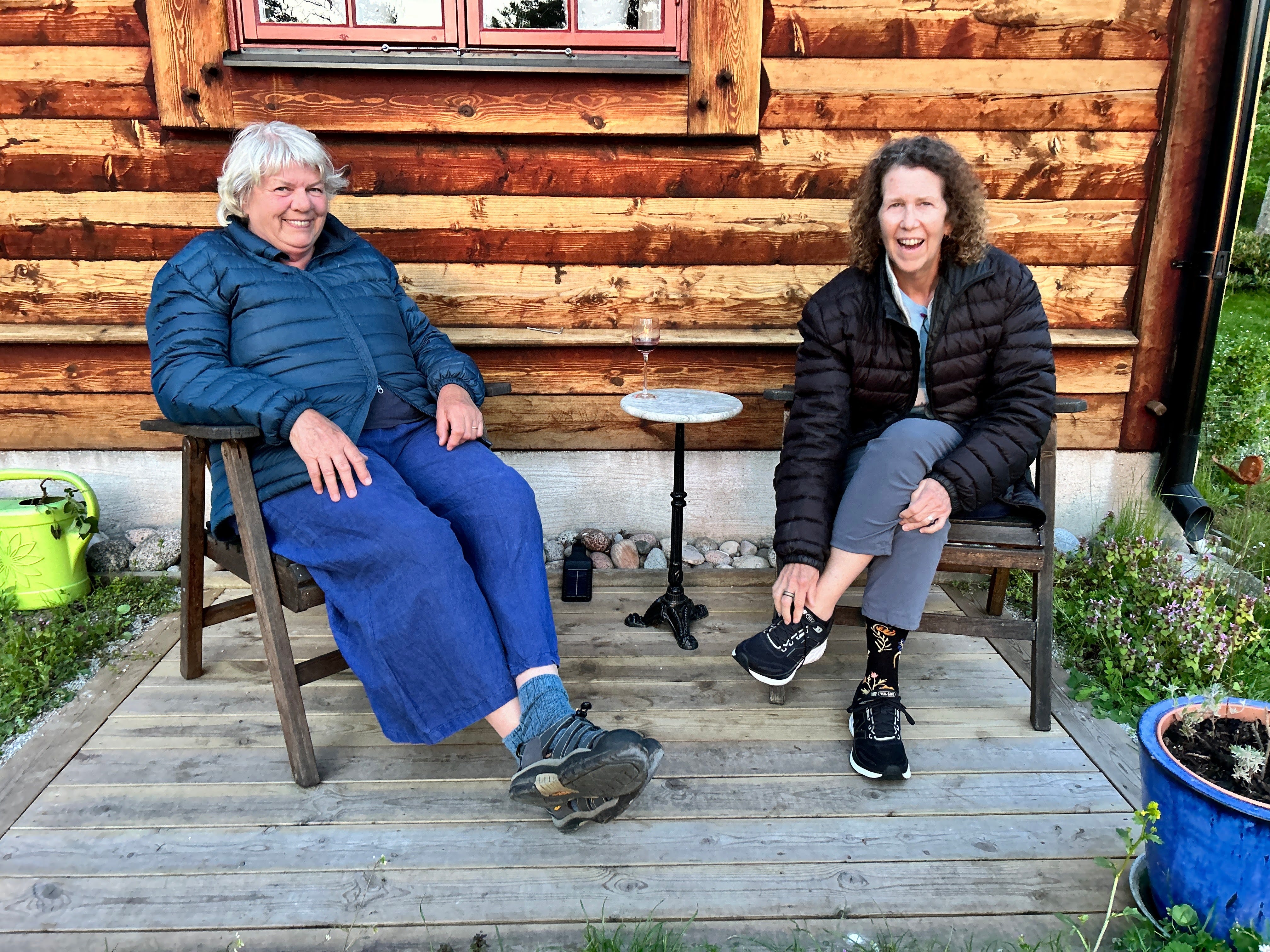
I came home from Sweden with a small jar of soil in my bag.
It’s black and rich, almost sandy. Loose and broken up with a few pieces of moss and what I think might be the tiniest root hairs.
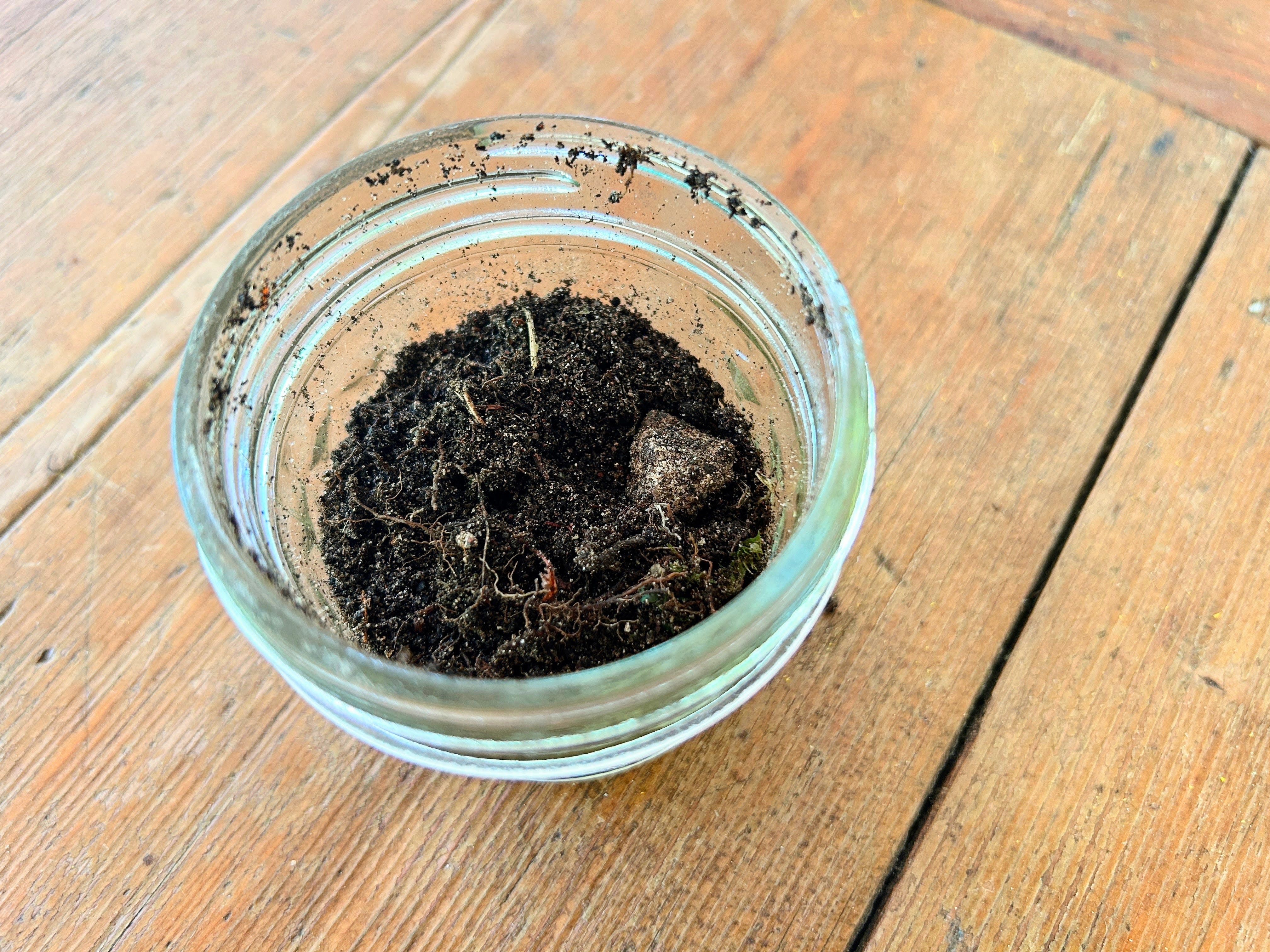
I gathered this loam on a sunny May Day earlier this year, just after Mother’s Day, on the land where my great-great grandmother was born in 1855 and where her mother died 19 years later using a small spade that Inger, a cousin I’d just met, had brought just for this purpose.
This soil came from a shady spot among rocks I’d never seen, grass I’d never sat on, brush that I couldn’t identify.
I’d never seen soil so dark, but this land was familiar.
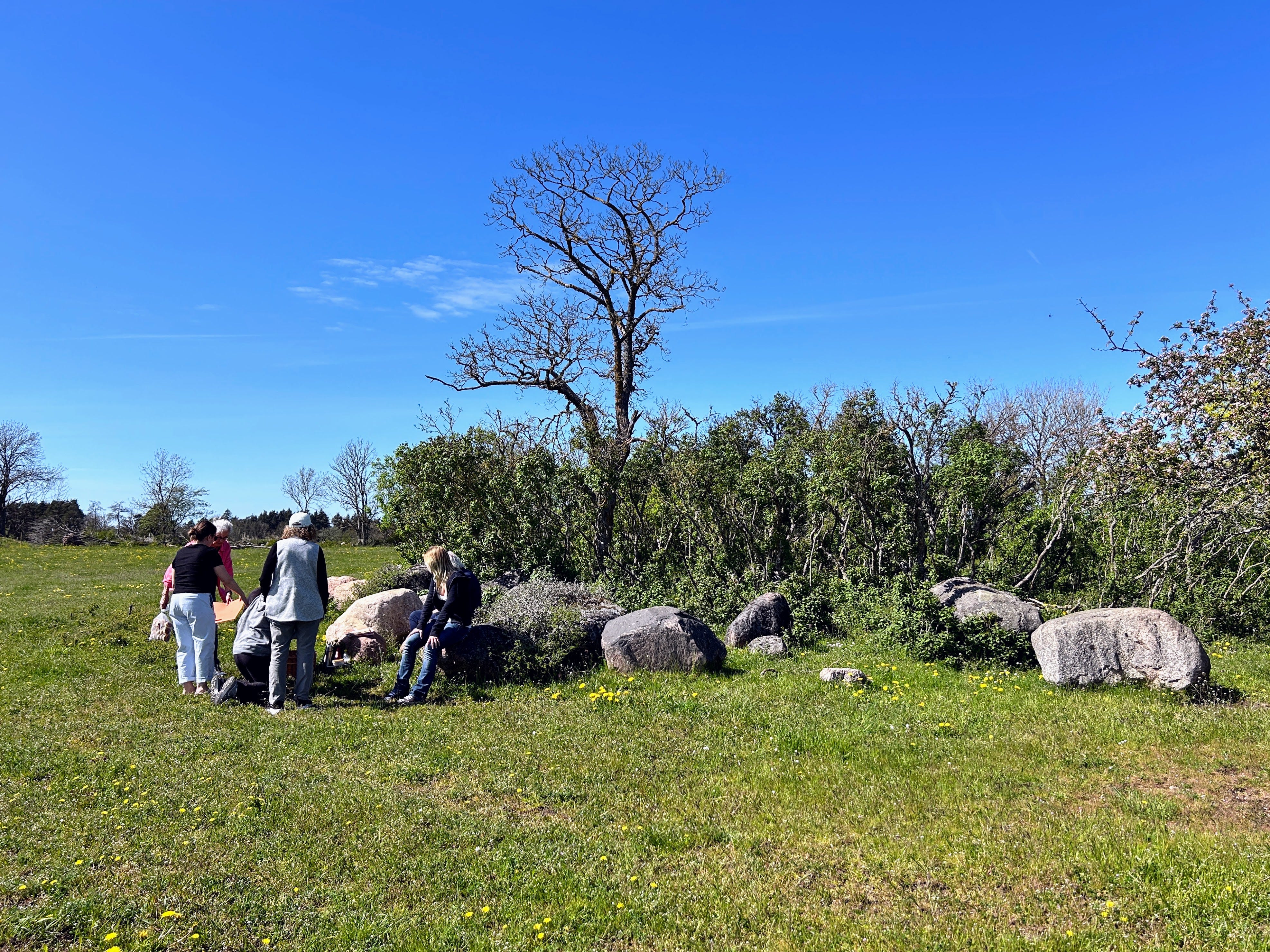
Today, it’s a cow field in a rural area on Gotland island known as Lilla Åby. You can look across the pasture and see the top of the church in nearby Bro, about 20 minutes outside the historic walled city of Visby, where Karolina lived as an adult.
When my sister and I visited Sweden in 2016, we didn’t know that we had relatives still living on Gotland, but we visited that church because it was listed in some of the birth and death records of our family.
I knew my ancestor had been there at some point, and that was enough for me.
Just after we got back from that trip to Sweden eight years ago, I got an email from a man named Ronney who introduced himself as the husband of my cousin.
This reunion at the ruins was happening because of that message.
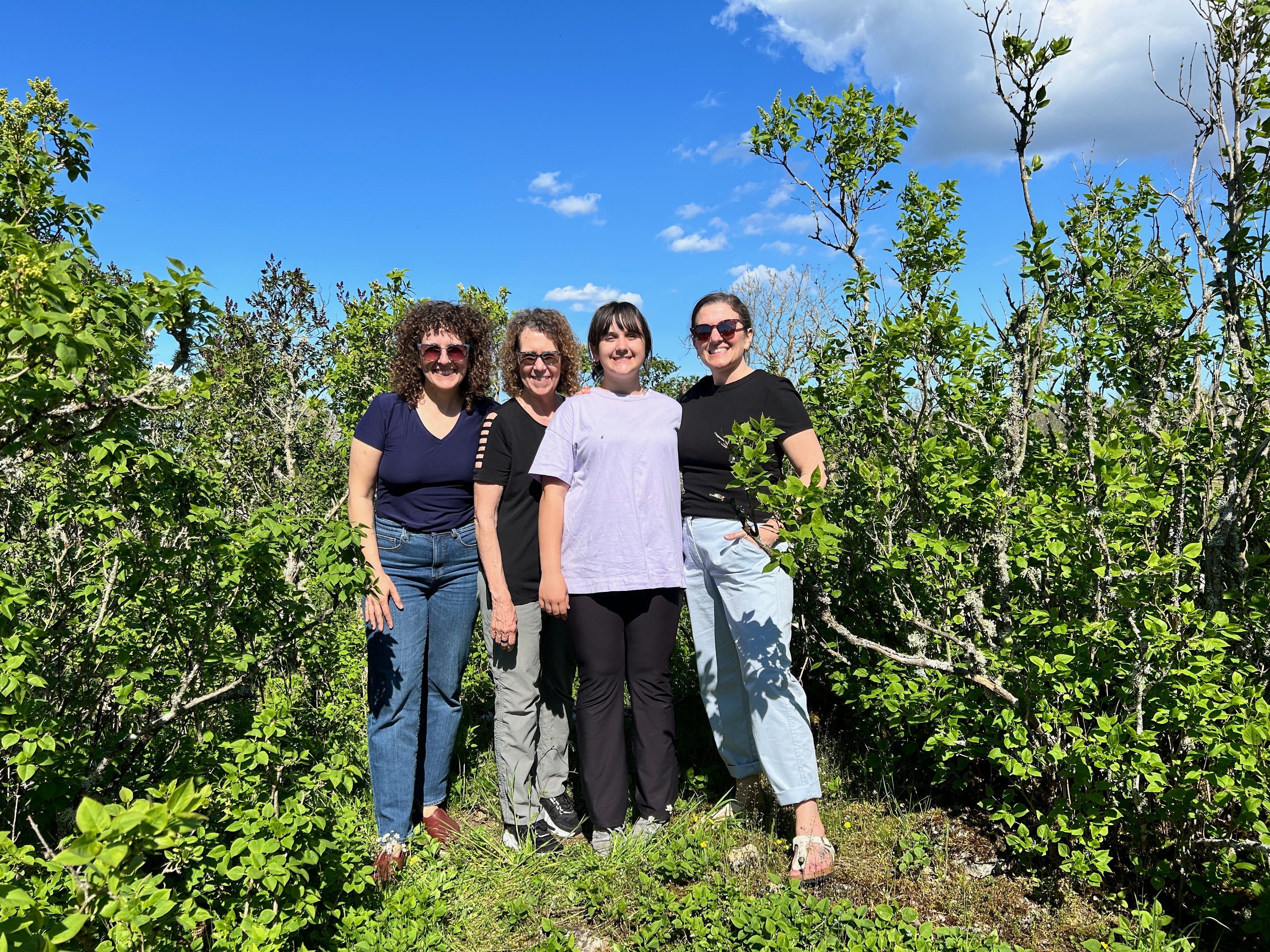
Through Ronney, we met two branches of the tree on this trip, four sisters on the mainland and a group of sisters who have stayed the closest to the ancestral roots.
Even though these sisters still live on the island, they, too, had lost track of exactly where our shared ancestors lived.
But, thanks to these emails and Facebook requests and the renewed interest in our greater family tree, they started asking around and eventually found this little plot of land that looked like a place for the cows to cool off.
The day in May, we parked next to this overgrown rock pile and approached with a sense of reverence.
“We are going to have fika with the ancestors,” Inger announced.
She pulled out a Thermos of hot water, a jar of instant coffee, two kinds of pastries, and a few plastic coffee cups and saucers for a traditional Swedish coffee break.
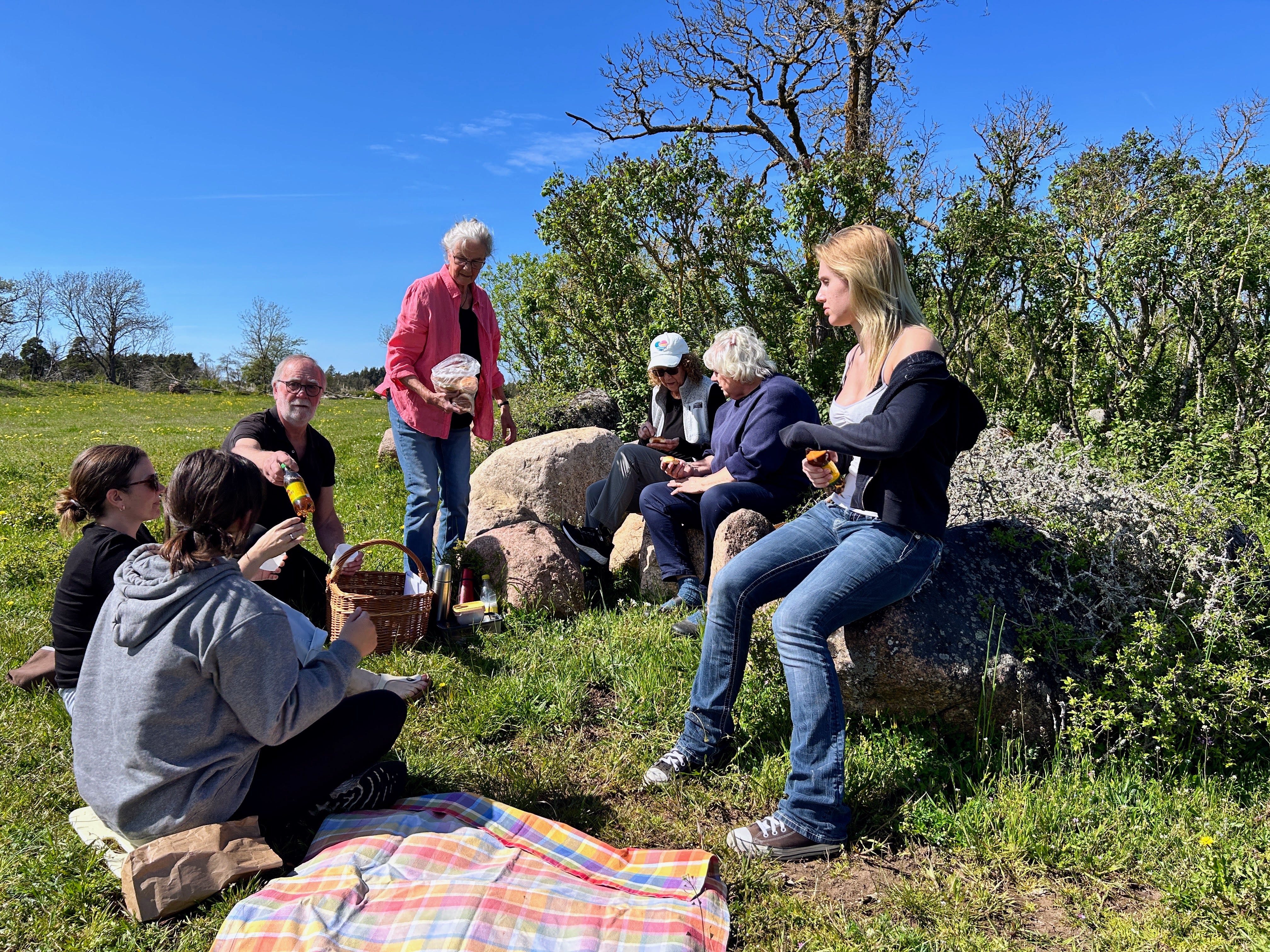
As we nibbled on kanelbullar and sipped on our Nescafe, I tried to imagine the house that once stood here and what life would have been like through those long summer days and even longer winter nights.
I imagined what it would have been like to walk to church from here. To have fika here. To give birth here.
All around us were these tiny white flowers that surely would have enchanted Karolina and her sisters when they were little. Inger pointed out the green onions that were coming up. “These would have been what they ate after a long, cold winter,” she said. (She served us her version of that soup the next day with thick slices of rye bread slathered with butter.)
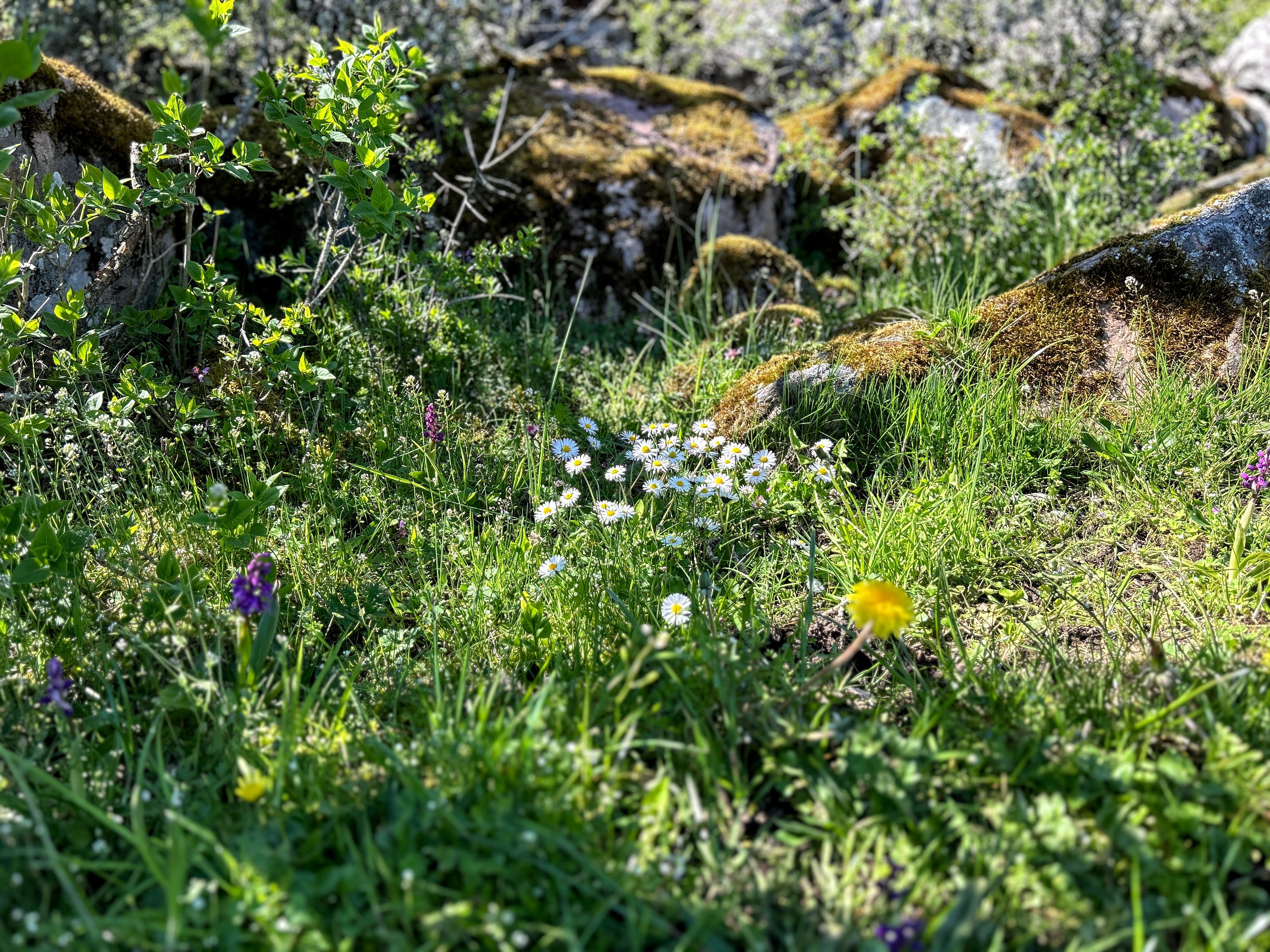
After a while, the spring Swedish sun got too strong and we decided it was probably time to go.
Inger and her sister Inez pointed to a sign they’d set up before our arrival.
A laminated piece of paper announced to the world, and in that moment the world was the handful of people in our group who understood just how monumental this moment was:
“In 1849 Petter Lundberg and his wife Britta Maria Ekedahl moved in to this cottage. Four of their seven children were born in this cottage. One of their children, Carolina, was born in this cottage in 1855. Carolina emigrated to Amerika in 1892.
In 2024, American descendants to Carolina visited this place. It was Sis Ann, born in 1954. Carolina was her grandmother's mother. Along with Sis Ann was her daughters Addie and Chelsea and Chelseas daughter June.”
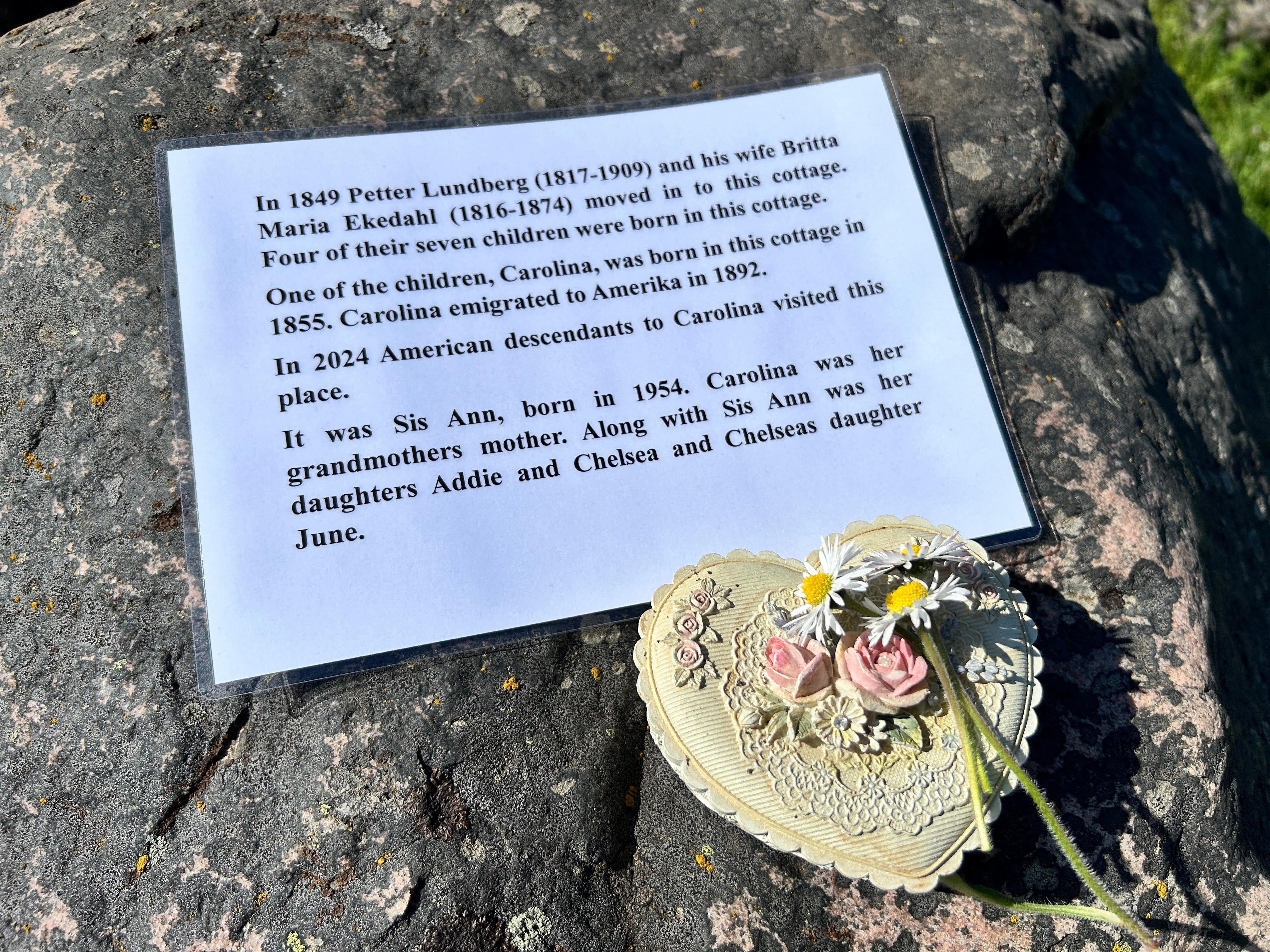
It didn’t matter that this sign wasn’t meant to mark this spot for eternity.
It was a small token of something much, much bigger.
Like that handful of soil.
And those sweet little pastries.
And those life-changing emails that lead to all these new roots.
Hello, readers! This is a story that you’ll find in the third issue of The Invisible Thread zine, which went out to subscribers in July. The theme of the issue is roots, and you can see why I wanted to include this piece with the four other stories about the things that keep us grounded.
Truthfully, I’m surprised that I didn’t include any stories about my hometown of Aurora in this issue. I realized this when I was making my, oh, 60th drive from Austin to Aurora, an extension I’ve carved out between the place I’m trying to make roots anew and the place where my roots feel most immediate.
I hope that these zines spark conversations in your own house and here on this platform about the anything-but-stagnant nature of ourselves and our stories. I can see how my perspective has changed even since I wrote this piece a few weeks ago while finishing up the zine.
I hope that this message finds you well this Friday afternoon. Back-to-school is around the corner for us, and stories about Aurora and Detroit and this encounter I had with my Meals on Wheels client today percolating in my mind.
Thanks for letting me share these stories with an audience who considers how their own perspectives are changing, even without a fika on the family ruins.
And if you’re looking to buy a single copy of any of the first three zines, go to theinvisiblethread.company.site and I can put one in the mail for you.
Sending my best,
Addie
Wept reading the last message and also gasped at beauty of your young blonde girl/woman in the sunlight … what experiences and roots you’re offering your own children! Proud of you.